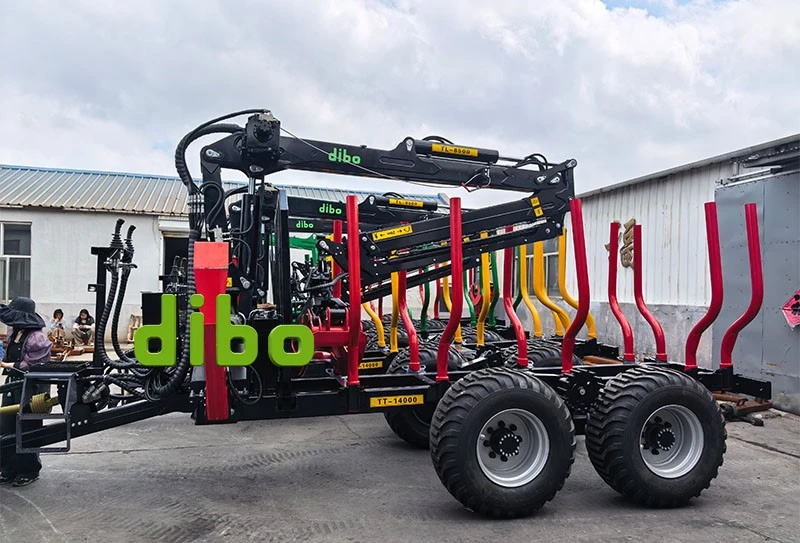
When selecting a timber trailer with a grapple loader, the key is to view it as an integrated work unit rather than just a trailer. You need to match components based on the progression of "tractor power → grapple loader performance → trailer load capacity." Here are the critical factors that determine the configuration:
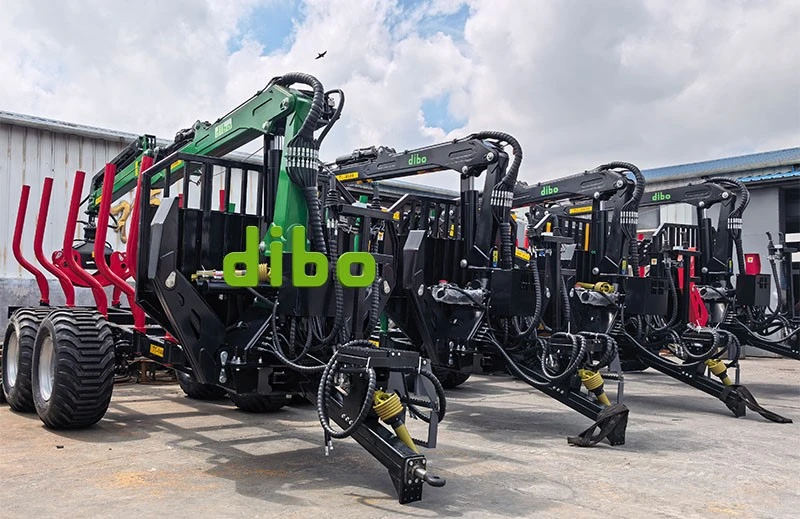
Step 1: Matching the Tractor and Timber Grapple
This is the foundational step. The performance of the timber grapple relies on the tractor's horsepower.
Check the horsepower range: Different grapples require different tractor horsepower ratings. For instance, a lightweight grapple with a 260kg lifting capacity and a 3.2-meter reach is typically paired with a 15–40 HP tractor. In contrast, a heavy-duty professional grapple requires a tractor with 80–100 HP (or more) to ensure sufficient power and stability.
Verify the hydraulic system: This is the step most easily overlooked. Ensure the tractor's hydraulic flow rate (L/min) falls within the grapple's "recommended hydraulic flow" range. For example, a heavy-duty grapple might require a flow rate of 40–60 L/min for optimal performance, whereas small-to-medium equipment might only need 25–50 L/min; if the flow is insufficient, the grapple will operate sluggishly and lack power.
Step 2: Determine key trailer specifications based on operational requirements
Once the timber loader is selected, the trailer's configuration should be tailored to the specific operating environment.
Load Capacity: This directly determines transport efficiency. Options range from light-duty trailers (1-ton capacity) to heavy-duty models (16 tons or more). The key is to estimate the total weight of the timber per load and include a safety margin.
Braking and Safety: A robust braking system is crucial when hauling heavy loads. We typically recommend air brakes for such applications; they provide significantly greater stopping power than inertia brakes, ensuring safety during heavy-load transport.
Steering and Maneuverability: For operations requiring agility in tight spaces or within forests, trailers with a pivoting drawbar design (allowing left-right movement) can significantly reduce the turning radius and improve maneuverability. Additionally, for muddy terrain, a 4WD system can be added; this utilizes hydraulic 4-wheel drive hubs to enhance the trailer's off-road performance.You can also opt for an automatically extendable beam to adjust the trailer's length to accommodate logs of various lengths.
Self-Unloading Function: If a single operator needs to handle the entire loading and unloading process, a hydraulic self-unloading function is virtually essential. It allows the cargo bed to tilt to the side or rear for rapid unloading.

The ideal setup is a trailer-mounted timber grapple-where the grapple is installed directly onto the trailer. This design creates a self-contained unit that can be towed and operated by a single tractor, offering great flexibility and efficiency. If you can provide details regarding your tractor's horsepower, as well as the approximate dimensions and weight of the timber you plan to handle, the Dibo team can help you analyze more specific configuration options.